
New Delhi: The Reserve Bank of India (RBI) announced an MPC rate hold, with the Monetary Policy Committee (MPC) unanimously deciding to keep the policy repo rate unchanged at 5.25% after its third bi-monthly meeting of FY2026-27 held on August 3, 4 and 5.
The decision reflects the central bank’s cautious approach amid rising global uncertainties, inflationary pressures driven by food and fuel prices, and evolving domestic economic conditions.
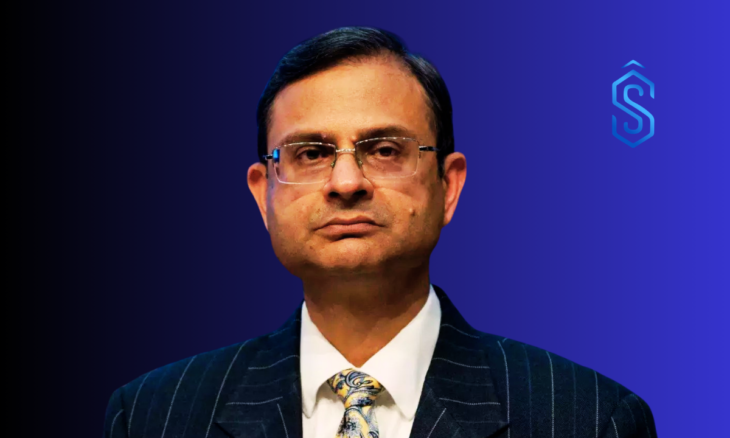
Announcing the decision in the Monetary Policy Statement, RBI Governor Sanjay Malhotra said, “The Monetary Policy Committee met for its third bi-monthly meeting of the current financial year on August 3, 4 and 5 to deliberate and decide on the policy repo rate.
After a detailed assessment of evolving macroeconomic and financial developments, as well as the outlook, the MPC unanimously decided to keep the policy repo rate unchanged at 5.25 per cent.
Consequently, the Standing Deposit Facility (SDF) rate will remain unchanged at 5 per cent, while the Marginal Standing Facility (MSF) rate and the bank rate will remain at 5.5 per cent. The MPC also decided to continue with the neutral stance.”
Global Headwinds Shape MPC Rate Hold Decision
Explaining the rationale behind the MPC Rate Hold, the RBI highlighted growing global economic uncertainty arising from the continuing West Asia conflict, disruptions in international trade routes, and persistent supply chain challenges.
According to the Governor, fresh tariffs imposed by the United States, volatile crude oil prices, fluctuating currencies, and instability in financial markets have further clouded the global outlook.
While some central banks have tightened monetary policy, others remain cautious amid elevated inflation expectations for 2026.
Against this backdrop, the Monetary Policy Committee concluded that maintaining the current policy rate and retaining the neutral stance would provide flexibility to respond to future economic developments.
MPC Rate Hold: Inflation Above Target but Core Inflation Remains Moderate
The RBI observed that headline inflation has increased above the target level, primarily due to higher food and fuel prices. However, inflation during the first quarter remained marginally below earlier projections because cost pressures have not fully passed through to consumers.
The central bank noted that price pressures remain largely confined to food and fuel, with little evidence of widespread inflation across the economy.
Core inflation, excluding precious metals, continues to remain benign and is expected to gradually align with broader core inflation by the end of the financial year.
The RBI expects headline inflation to rise further in the near term and peak during the third quarter before moderating thereafter.
The Monetary Policy Committee emphasized that the inflation outlook remains uncertain due to factors including the southwest monsoon, El Niño conditions, geopolitical tensions and global trade policy developments.
Because of these uncertainties, the Committee believes greater clarity on the inflation trajectory is required before considering any change in policy rates.
MPC Rate Hold: Growth Remains Resilient Despite External Challenges
Despite global challenges, the RBI said India’s economy continues to demonstrate resilience.
Domestic demand remains strong, manufacturing and services sectors continue expanding, and exports have remained robust, reaffirming India’s position as the world’s fastest-growing major economy.
The MPC observed that while headline inflation may rise temporarily due to supply-side pressures, it has not become broad-based.
Growth is expected to remain resilient even though it may moderate somewhat during the current financial year.
The Committee reiterated that future monetary policy decisions will continue to balance inflation management with supporting economic growth as underlying inflation gradually normalizes.
Also Read: The Governance Challenge 2026 Challenges Students to Make Maharashtra an Innovation Hub by 2035
MPC Rate Hold: Domestic Economy Shows Strong Momentum
The RBI stated that supply-side disruptions caused by the West Asia conflict had eased after June 2026, allowing temporary government measures to be withdrawn and key input supplies to normalize.
However, renewed escalation of the conflict since early July has once again increased volatility in global energy prices and supply chains.
Despite persistent global uncertainty, high-frequency indicators suggest that India’s domestic economy performed better than expected during the first quarter.
Early corporate results indicate healthy growth in manufacturing, supported by expansionary Purchasing Managers’ Index (PMI) readings.
The services sector has also maintained momentum, backed by strong domestic demand.
Private consumption continues to be driven by discretionary spending, while investment activity remains steady due to sustained government expenditure on infrastructure and construction.
Merchandise exports registered double-digit growth during the quarter, while services exports continued their strong performance.
Overall, the RBI assessed that India’s economic performance exceeded expectations during the first quarter.
MPC Rate Hold: Agriculture Outlook Hinges on Monsoon Performance
The RBI noted that the outlook for agriculture remains uncertain due to deficient and uneven southwest monsoon rainfall under El Niño conditions. However, reservoir levels remain close to normal, providing some support to the agricultural sector.
The central bank said the government’s initiatives on crop diversification, promotion of short-duration and climate-resilient crops, along with water harvesting and conservation measures, are expected to mitigate the impact of deficient rainfall.
While manufacturing could face higher input costs, the RBI believes diversification of global supply chains should help cushion the impact. Meanwhile, the services sector is expected to continue its strong performance, supported by resilient domestic demand.
On the demand side, any adverse impact of weak monsoon on rural consumption is expected to be partly offset by allied agricultural activities and various government welfare schemes.
Urban consumption is also expected to remain healthy, supported by robust employment conditions and continued expansion of the services sector.
Strong capacity utilisation, healthy credit growth and sustained government infrastructure spending are expected to support investment activity. In addition, recently concluded bilateral trade agreements and efforts by Indian manufacturers to diversify export markets are expected to strengthen external demand.
However, the RBI cautioned that renewed geopolitical tensions in West Asia, disruptions in global supply chains, volatility in international financial markets and weather-related shocks continue to pose downside risks to economic growth.
MPC Rate Hold: RBI Raises FY27 GDP Growth Projection to 6.7%
As part of the MPC Rate Hold announcement, the RBI revised India’s real GDP growth forecast for the current financial year upward to 6.7%, an increase of 10 basis points from its earlier estimate.
The quarterly projections are:
- Q1: 7.0%
- Q2: 6.4%
- Q3: 6.5%
- Q4: 6.8%
The central bank stated that risks to the growth outlook remain evenly balanced.
MPC Rate Hold: Inflation Projected at 5% for FY27
The RBI observed that Consumer Price Index (CPI) inflation increased to 4.4% in June after remaining below the target level for sixteen consecutive months.
However, inflation in June was still 30 basis points lower than earlier projections.
The increase was primarily driven by higher food prices, fuel prices and fuel-related inflation in select services such as restaurants.
Despite rising input costs, core inflation excluding food and fuel remained unchanged at 3.9% during May and June.
Core inflation excluding precious metals remained even lower at 2.3–2.5% during the same period.
Looking ahead, the RBI identified El Niño, uneven rainfall distribution and volatile global crude oil prices as major risks to the inflation outlook.
While inflationary pressures remain largely limited, the central bank warned that second-round effects from higher food, fuel and input costs could eventually translate into broader inflation across sectors.
After assessing all factors, the RBI projected CPI inflation at 5% for FY27, which is 10 basis points lower than its previous estimate.
The quarterly inflation projections are:
- Q1: 5.3%
- Q2: 4.7%
- Q3: 5.9%
- Q4: 5.5%
Core inflation is projected at 4.3% for the financial year.
MPC Rate Hold: Liquidity Conditions Remain Comfortable
The RBI stated that system liquidity remained in surplus, with the average daily surplus under the Liquidity Adjustment Facility standing at nearly ₹1 lakh crore since the previous Monetary Policy Committee meeting.
The return of currency during the monsoon season, reduction in government cash balances and recent measures to attract capital inflows are expected to further improve banking system liquidity.
The weighted average call rate continued to remain within the policy corridor, averaging 5.31% since the June policy meeting.
Short-term money market rates moderated during July, while government security yields softened following measures introduced by the government and the RBI to attract foreign investment into Indian debt markets.
Although transmission in lending and deposit rates moderated slightly during May and June, overall credit growth remained robust across sectors.
The RBI reiterated that it would continue proactive two-way liquidity operations to ensure adequate liquidity in the banking system while keeping the weighted average call rate aligned with the policy repo rate.
MPC Rate Hold: Banking Sector Remains Financially Strong
The RBI said scheduled commercial banks continue to maintain healthy capital adequacy, liquidity, asset quality and profitability.
While net interest margins have moderated compared to last year, the overall financial health of banks remains sound.
Similarly, Non-Banking Financial Companies (NBFCs) continue to maintain adequate capital, improved gross non-performing assets and stronger profitability.
MPC Rate Hold: External Sector Shows Continued Resilience
Despite global macroeconomic challenges, India’s current account deficit remained well within sustainable levels for emerging economies during the previous financial year.
During April-May this year, the current account registered a surplus of $2.8 billion, primarily supported by services exports and strong inward remittances.
India’s merchandise trade deficit widened to around $86 billion during the first quarter compared with $69 billion in the same period last year, mainly because of higher imports of crude oil, electronic goods and gold.
The RBI said implementation of the India-UK trade agreement, other recently concluded trade pacts, healthy services exports and strong remittances are expected to help offset risks arising from slowing global trade growth and higher energy prices.
- Gross Foreign Direct Investment (FDI) inflows increased to $30.7 billion during the first quarter compared with $26.7 billion in the corresponding period last year.
- Foreign Portfolio Investment (FPI) also witnessed a turnaround during June and July, recording net inflows of $7.1 billion, mainly into the debt segment.
- India’s foreign exchange reserves continue to remain comfortable, providing import cover of more than ten months and covering nearly 91% of external debt.
MPC Rate Hold: RBI Announces Additional Regulatory Measures
Apart from the MPC Rate Hold, the RBI announced several policy measures aimed at strengthening the financial system.
The central bank said it will issue draft guidelines for resuming licensing of Urban Cooperative Banks based on feedback received on an earlier discussion paper.
It will also issue revised draft directions for the credit monitoring framework applicable to rural cooperative banks after a comprehensive review of the existing arrangement.
Additionally, the RBI proposed harmonising and standardising the regulatory framework governing interest rates on advances across all regulated entities to enhance transparency and strengthen consumer protection.
MPC Rate Hold: RBI Reaffirms Commitment to Stability
Concluding the Monetary Policy Statement, Governor Sanjay Malhotra said the rapidly changing developments in the West Asia conflict continue to affect global economic conditions and business sentiment.
Despite these external shocks, he said India’s strong macroeconomic fundamentals continue to support economic resilience.
The RBI reaffirmed its commitment to implementing policies that support sustainable growth, preserve price stability, strengthen the financial system and protect consumers while remaining vigilant to evolving domestic and global economic developments.
MPC Rate Hold: ANAROCK: Rate Stability Alone May Not Revive Affordable Housing
Reacting to the MPC Rate Hold, Anuj Puri, Chairman – ANAROCK Group, said the decision provides stability in an uncertain macroeconomic environment but may not be sufficient to revive India’s affordable housing segment.
He said, “The unchanged policy rate is a welcome signal of stability amid the ongoing macroeconomic uncertainty, but it is not enough to reignite the mass-market housing cycle. ANAROCK’s Q2 2026 data shows that total sales in the top seven cities fell 6% year-on-year to about 90,715 units, while affordable housing supply has fallen to just 6% of total launches even as overall new supply increased 7% year-on-year to about 1.06 lakh units. This mismatch is the main area of concern.
Affordable housing demand remains very rate-sensitive, and with average residential prices still growing at 7% annually across the top cities, rate steadiness alone will do little to improve affordability. The market is obviously moving to a more balanced position overall—but this balance comes from the high-end luxury housing segment, not from the part of the market that drives broad-based homeownership.”